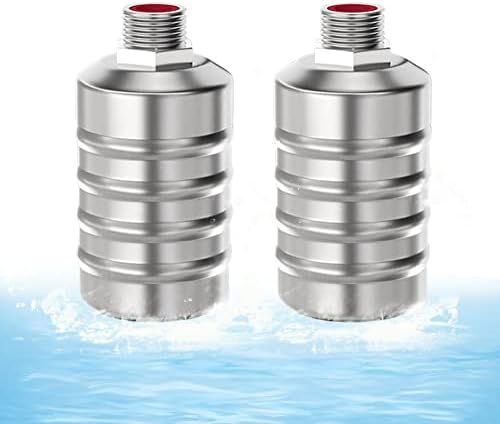
Stainless Steel Float: Essential for Liquid Management
In the realm of industrial processes, efficient liquid management is paramount to ensuring optimal performance and preventing costly downtime. Among the essential components that facilitate precise liquid level control, stainless steel floats stand out as a reliable and versatile solution.
Understanding Stainless Steel Floats
Stainless steel floats are hollow, sealed vessels typically fabricated from corrosion-resistant stainless steel alloys. Their primary function is to float on the surface of a liquid, providing a physical indication of the liquid level within a tank or vessel.
The buoyancy of the float is directly proportional to the liquid’s density and the volume of liquid displaced. As the liquid level rises, the float rises accordingly, providing a visual or electrical signal to indicate the liquid’s presence and level.
Benefits of Stainless Steel Floats
Corrosion Resistance: Stainless steel’s exceptional corrosion resistance makes it ideal for use in harsh environments or with corrosive liquids.
Durability: Stainless steel floats are highly durable and can withstand extreme temperatures, pressure, and vibration.
Accuracy: The precise design and construction of stainless steel floats ensure accurate liquid level measurements.
Versatility: Floats are available in various shapes, sizes, and configurations to suit a wide range of applications.
Low Maintenance: Stainless steel floats require minimal maintenance and can operate reliably for extended periods.
Applications of Stainless Steel Floats
Stainless steel floats find application in a vast array of industries, including:
Oil and Gas: Monitoring liquid levels in storage tanks, pipelines, and processing equipment.
Chemical Processing: Controlling liquid levels in reactors, mixing vessels, and storage tanks.
Water Treatment: Measuring water levels in reservoirs, tanks, and distribution systems.
Food and Beverage: Monitoring liquid levels in processing equipment, storage tanks, and packaging lines.
HVAC: Controlling liquid levels in boilers, cooling towers, and other HVAC systems.
Types of Stainless Steel Floats
Open-Top Floats: These floats have an open top that allows liquid to enter and displace the air within. They are suitable for applications with relatively low liquid densities.
Closed-Top Floats: These floats have a sealed top that prevents liquid from entering. They are ideal for applications with high liquid densities or where liquid contamination must be avoided.
Magnetic Floats: These floats contain a magnet that interacts with a magnetic switch or sensor. They provide non-contact liquid level detection and are suitable for applications where direct contact with the liquid is undesirable.
Selection Criteria for Stainless Steel Floats
When selecting a stainless steel float, consider the following factors:
Liquid Density: The float’s buoyancy must be appropriate for the liquid’s density.
Liquid Compatibility: Ensure the float’s material is compatible with the liquid being measured.
Operating Conditions: Consider the temperature, pressure, and vibration levels in the application.
Accuracy Requirements: Determine the required level of accuracy for the application.
Size and Configuration: Select a float that fits the available space and meets the specific requirements of the application.
Conclusion
Stainless steel floats are indispensable components for precise liquid level management in various industrial applications. Their corrosion resistance, durability, accuracy, versatility, and low maintenance requirements make them an ideal choice for demanding environments. By carefully selecting the appropriate type and configuration of stainless steel float, engineers can ensure optimal liquid level control and prevent costly downtime.
Post a Comment for "Stainless Steel Float: Essential For Liquid Management"